
How Long Can a Baby Sleep in a Moses Basket?
Most babies use a moses basket from birth until around 3 to 4 months old. But age is actually the least reliable way to judge it. What matters more is your baby’s weight, their development, and whether they physically still fit. Here’s how to figure out when your baby is ready to move on.

The Three Things That Decide When to Stop
There’s no single answer because every baby grows at their own pace. Instead, you’re watching for three things. Whichever happens first means it’s time to transition to a cot.
1. Weight: The 9kg Limit
Moses baskets are tested to hold babies up to 9kg (about 20lbs). This isn’t a suggestion from brands. It comes from BS EN 1466, the British and European safety standard that all moses baskets are tested against. Beyond 9kg, the basket hasn’t been safety-tested to support your baby’s weight.
The good news is that most babies won’t hit 9kg during typical moses basket use. Based on WHO growth data, here’s roughly when babies reach 9kg depending on where they sit on the growth chart:
| Growth Percentile | Boys (approx.) | Girls (approx.) |
|---|---|---|
| 50th (average) | 8 to 9 months | 9 to 10 months |
| 75th (above average) | 6 to 7 months | 7 to 8 months |
| 91st+ (larger babies) | 4 to 5 months | 5 to 6 months |
So if your baby is average-sized, weight probably won’t be the reason they outgrow the basket. They’ll likely outgrow it by development or size first. But if you’ve got a bigger baby (91st percentile and up), keep an eye on this. They could reach 9kg as early as 4 months.
You can check your baby’s percentile on their red book growth chart or ask your health visitor.
2. Development: Rolling, Sitting, or Pushing Up
This is usually what ends moses basket use before the weight limit does. Under the BS EN 1466 standard, moses baskets are designed for babies who cannot yet:
- Roll over on their own
- Sit up without support
- Push up on their hands and knees
Once your baby can do any one of those things, the basket is no longer the right sleep space. There’s a risk they could tip it, pull themselves up against the sides, or roll into an unsafe position.

Here’s roughly when those milestones tend to happen:
| Milestone | Typical Age | Notes |
|---|---|---|
| First rolls (tummy to back) | 3 to 4 months | Can catch you off guard. Some babies do this early |
| Rolling both ways | 4 to 6 months | Once they’re rolling freely, it’s time |
| Pushing up on arms | 4 to 6 months | Chest off the floor during tummy time |
| Sitting with support | 4 to 6 months | Not a trigger on its own. It’s unsupported sitting that matters |
| Sitting unaided | 5 to 7 months | Even briefly. This means they have the core strength to destabilise the basket |
| Pushing up on hands and knees | 6 to 8 months | Pre-crawling position, definitely time to move |
Every baby is different. Some roll at 3 months, others not until 5 or 6. That’s why age alone is a poor guide. A very active 3-month-old might need to move to a cot before a more chilled-out 5-month-old.
3. Physical Size: When They Don’t Fit
If your baby’s head or feet are regularly touching the ends of the basket, or they look cramped and uncomfortable, it’s time to move on regardless of weight or milestones. Standard moses baskets are typically 70 to 90cm long internally. Most babies physically outgrow them somewhere between 3 and 5 months.
Quick Reference: When to Move to a Cot
Move your baby to a cot when any of these happen, whichever comes first:
- They reach 9kg
- They can roll over
- They can sit up without support (even briefly)
- They can push up on hands and knees
- Their head or feet are touching the ends of the basket
- They seem cramped or are waking more because they can’t get comfortable
For most families, this happens somewhere between 3 and 5 months.

Can You Use a Moses Basket for Overnight Sleep?
Yes, that’s what they’re designed for. A moses basket is a full-time sleep space for newborns, day and night. The NHS recommends that babies sleep in the same room as their parents for at least the first 6 months, on a separate sleep surface. A moses basket in your bedroom ticks both boxes.
One of the practical advantages of a moses basket over a cot for those early months is portability. You can move it from your bedroom at night to the living room during the day, so your baby is always sleeping near you. According to the Lullaby Trust, room sharing alone reduces the risk of SIDS by up to 50%.
Safe Sleep Basics While Using a Moses Basket
Whichever moses basket you use, these are the safe sleep essentials from the Lullaby Trust and NHS:
- Always on their back for every sleep
- Feet to foot so they can’t wriggle down under blankets
- Firm, flat mattress where their head barely sinks in
- Nothing else in the basket – no pillows, duvets, bumpers, toys, or sleep positioners
- Room temperature 16 to 20°C – use a room thermometer, not guesswork
- Lightweight blankets or a sleeping bag only, tucked in firmly below shoulder level
- Same room as you for all sleeps, day and night, for at least 6 months
How to Actually Make the Transition to a Cot
This is the part most guides skip. Telling a parent “just move them to a cot” isn’t particularly useful when your baby has spent every night of their life in a cosy basket and the cot feels like an aircraft hangar to them.
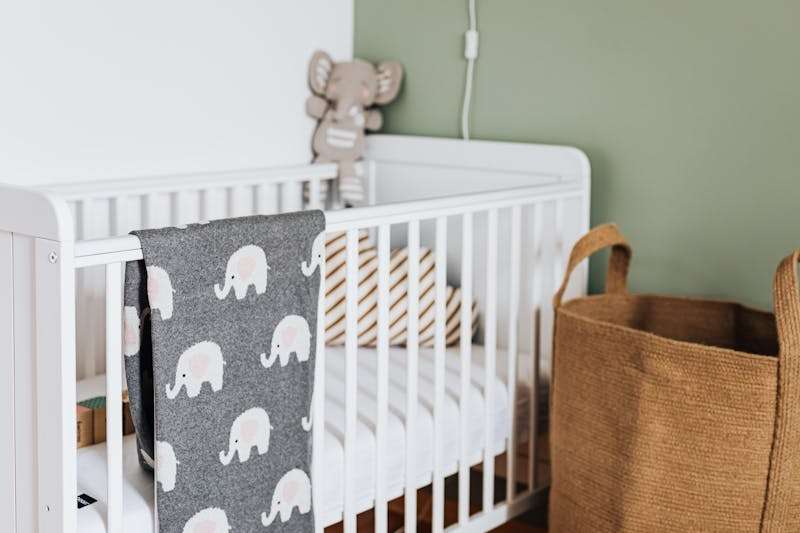
Here’s what tends to work:
Start with daytime naps. Put the cot in the room where your baby naps during the day. Let them get used to the space when they’re less tired and less likely to protest. Keep nighttime in the moses basket for now.
Keep everything else the same. Same sleeping bag, same room temperature, same bedtime routine. The cot is the only thing that changes. Babies notice more than you’d think. If you change five things at once, you won’t know what’s upsetting them.
Try the basket inside the cot. Some parents place the moses basket (without the stand) inside the cot for a few days so baby still has the familiar enclosed feeling but is getting used to the cot location. Then remove the basket.
Use rolled towels for cosiness (under the sheet, not near baby’s face). A cot is much bigger than a basket. Some parents roll towels and place them under the fitted sheet at the sides to create a slightly snugger feel. Make sure they’re firmly under the sheet and nowhere near baby’s head or face.
Give it a few nights. Most babies adjust within 3 to 5 nights. The first night or two might be rough, but consistency is what makes it work.
What About Second-Hand Moses Baskets?
If someone’s offered you a hand-me-down, check these things before using it:
- Mattress – buy a new one. Second-hand mattresses can harbour bacteria and may have lost firmness. The Lullaby Trust recommends a new mattress for each baby.
- Structure – check for any damage, loose stitching (on crochet or knitted baskets), cracked wicker, or wobbly handles.
- Stand – make sure it’s the original matching stand and that the basket sits securely without wobbling.
- Age – safety standards update over time. If the basket is very old, it may not meet current standards.
Frequently Asked Questions
My baby is 3 months old and not rolling yet. Can I keep using the moses basket?
Yes, as long as they’re under 9kg, not rolling, not sitting, not pushing up, and still physically fit in the basket comfortably. Age alone doesn’t determine when to stop. It’s the three triggers (weight, development, size) that matter.
My baby rolled once. Does that count?
If they’ve rolled once, they can roll again. Probably when you’re not watching. It’s safer to start transitioning to a cot once you’ve seen that first roll, even if it seemed like a fluke.
Can I use the moses basket just for daytime naps after they’ve outgrown it for night sleep?
The same rules apply for every sleep. If your baby has hit any of the three triggers, the basket isn’t safe for naps either. Use the cot for all sleeps once they’ve outgrown the basket.
Is a moses basket or a next-to-me crib better?
Different tools for different situations. A moses basket is portable, so you take it wherever you go in the house. A next-to-me crib stays by your bed and makes night feeds easier. Plenty of parents use both: basket during the day, crib at night. Neither is objectively “better”. It depends on your setup and what works for your family.
What’s the maximum weight for a moses basket?
9kg (about 20lbs), as defined by BS EN 1466, the safety standard moses baskets are tested against. But remember, most babies outgrow the basket by development or physical size before they hit 9kg.
Sources
The guidance in this article is based on the following sources. We’d recommend reading the Lullaby Trust and NHS pages directly for the most up-to-date safe sleep advice.
- Lullaby Trust – Safer Sleep Guidelines
- NHS – Reduce the Risk of Sudden Infant Death Syndrome
- BS EN 1466:2023 – Safety Standard for Carry Cots and Moses Baskets
- WHO – Child Growth Standards (Weight-for-Age)
- RCPCH – UK-WHO Growth Charts
